Fixing a Tripped Circuit Breaker, Fast
A tripping circuit breaker at your Haberfield home is the switchboard protecting you, but one that refuses to stay on means a fault worth finding. Get in touch on (02) 9538 7139 and we will chase it down for you.
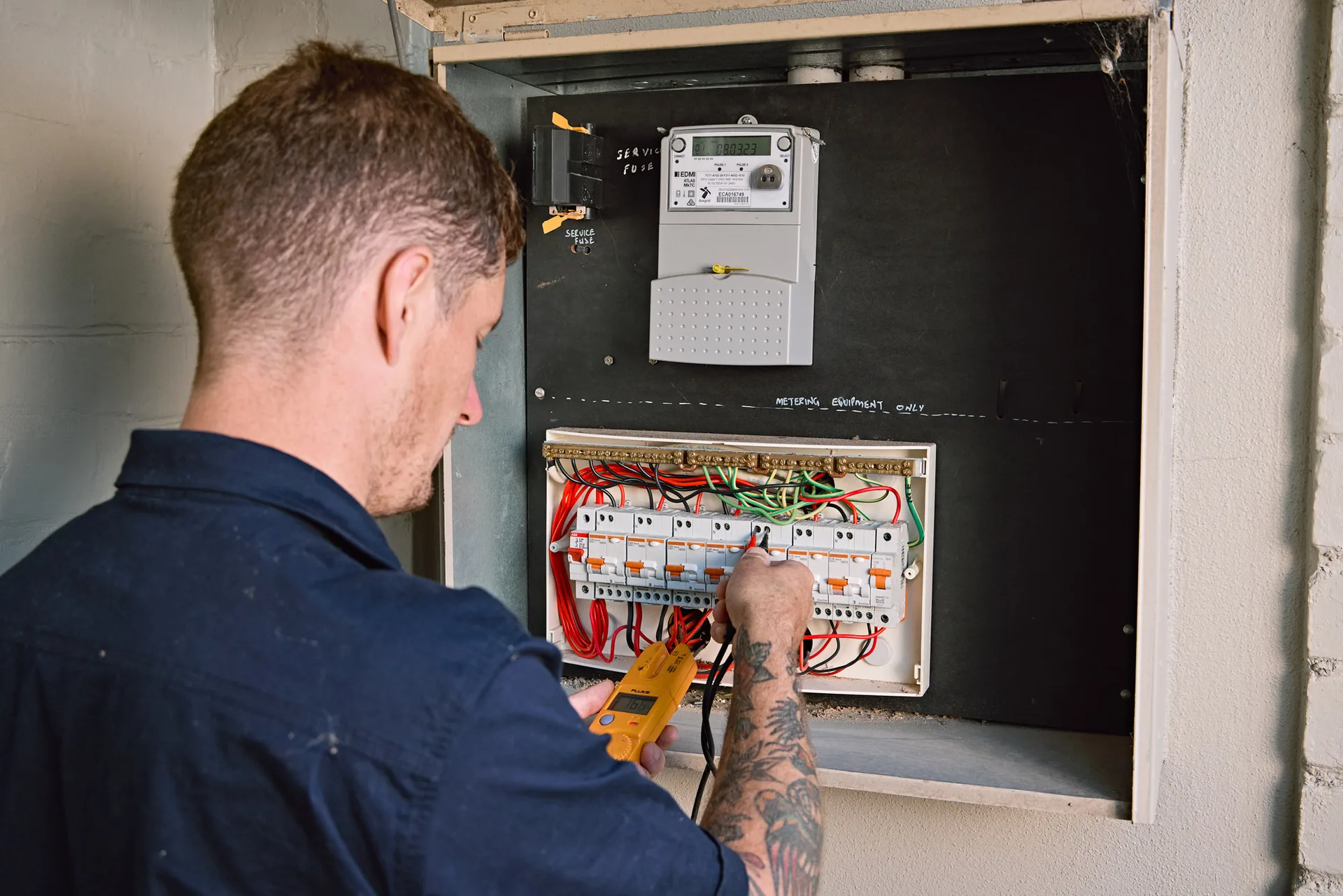
Why Your Breaker Keeps Tripping
A circuit breaker is an automatic switch that watches the current on a circuit. The moment that current climbs past the safe limit, the breaker flips itself off and cuts the power.
That is protection working as designed. Where a fuse is used up when it goes, a breaker simply resets, so you can switch it back on once the cause is dealt with.
The reset is the trap. Because flicking it back on is so easy, people do it again and again without asking why it keeps going.
A breaker that trips once and stays on afterwards was probably reacting to a brief overload. A breaker that trips straight back, or trips repeatedly, is pointing at a real fault on that circuit.
Some boards also carry safety switches, known as RCDs or RCBOs. Those trip on a different problem, an earth leakage, where current is escaping to earth rather than simply running too high.
That difference matters. An ordinary breaker guards the wiring against overload, while a safety switch guards you against a shock, so which one tripped points us at a very different fault.
Knowing which device let go tells us a lot before we even lift the cover.
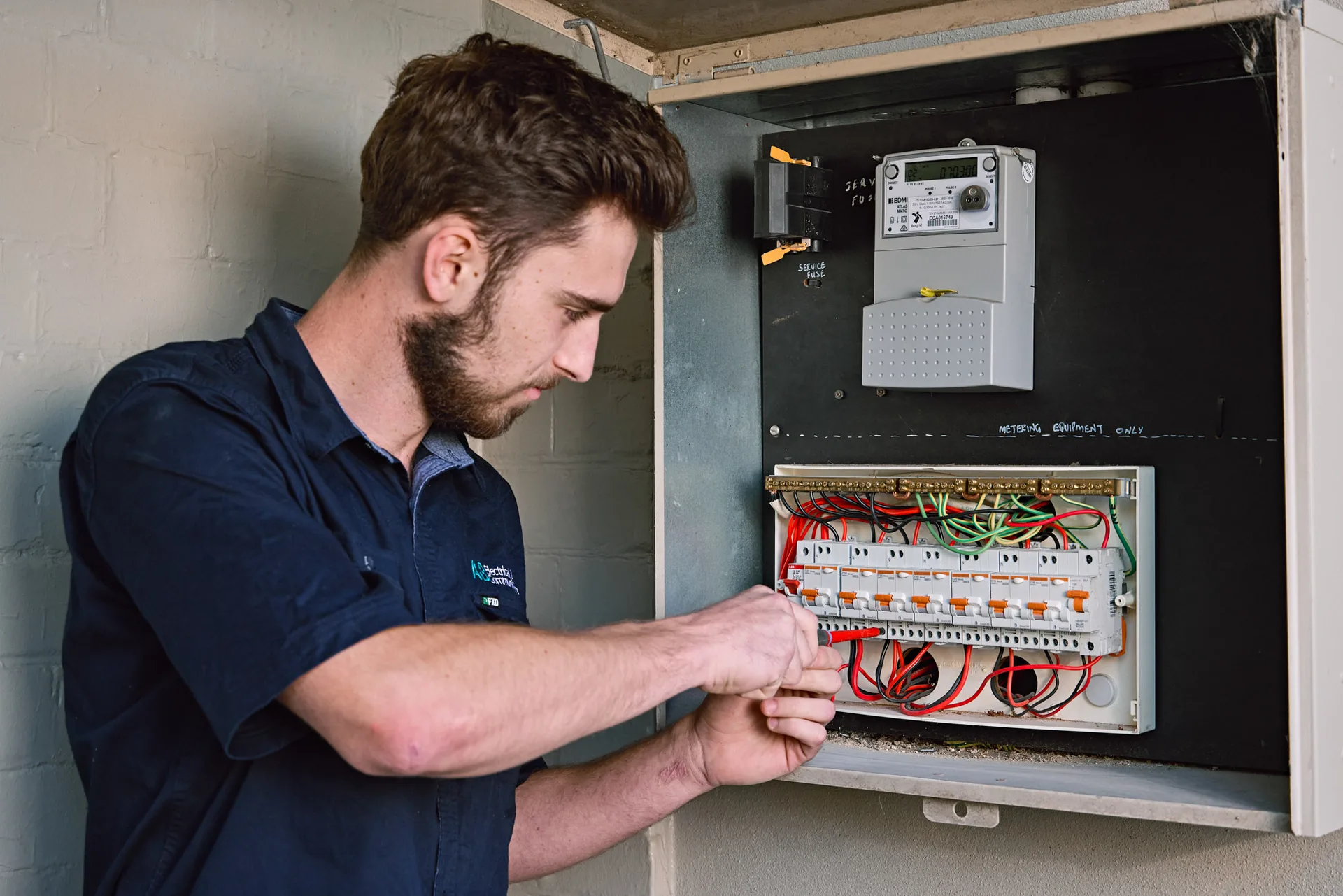
Six Causes, From Common to Rare
Most tripping breakers trace back to one of the causes below, listed roughly from the everyday to the unusual.
- Circuit overload. Too many things drawing at once, so the combined load pushes the breaker past what it allows.
- A failing appliance. A heater, fridge or power tool that has developed an internal fault will trip the circuit it runs on.
- Earth leakage. Current escaping to earth through damp or damaged wiring, which trips a safety switch rather than an ordinary breaker.
- A dead short. A live wire touching neutral makes direct contact and drives an instant surge that trips the breaker hard.
- A worn breaker. After decades in service a breaker can weaken and begin tripping below the load it should hold.
- Moisture or pests. Water in an outdoor fitting, or a rodent-chewed cable in the roof, creates an on-and-off fault that trips at odd hours.
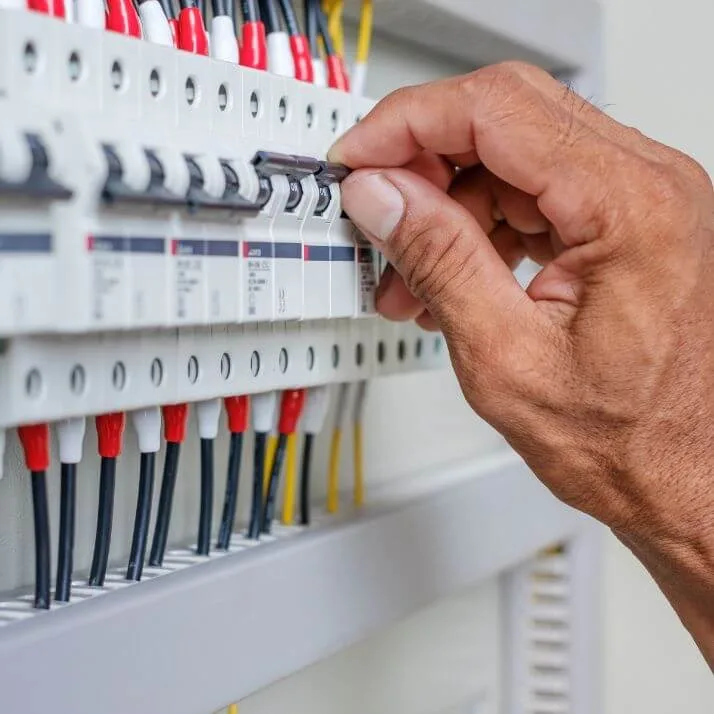
How Serious Is It?
A breaker doing its job is a good sign, not a bad one, because it is cutting power before a circuit can overheat. So a one-off trip after a heavy morning is rarely cause for alarm.
The picture changes when the trips keep coming. Take these seriously and stop resetting:
- The breaker trips again the instant you reset it, with the load switched off
- A safety switch trips repeatedly, which points to current leaking to earth
- The board itself feels warm, smells scorched, or shows browning around a breaker
- A circuit trips only when it rains or when one particular appliance runs
Any of those means an underlying fault, not a passing overload. Leave the circuit alone and have a licensed electrician test it.
The reset button makes it tempting to just carry on, but each reset sends current back through whatever caused the trip. On a genuine fault, that is how a small problem quietly grows into a bigger one.
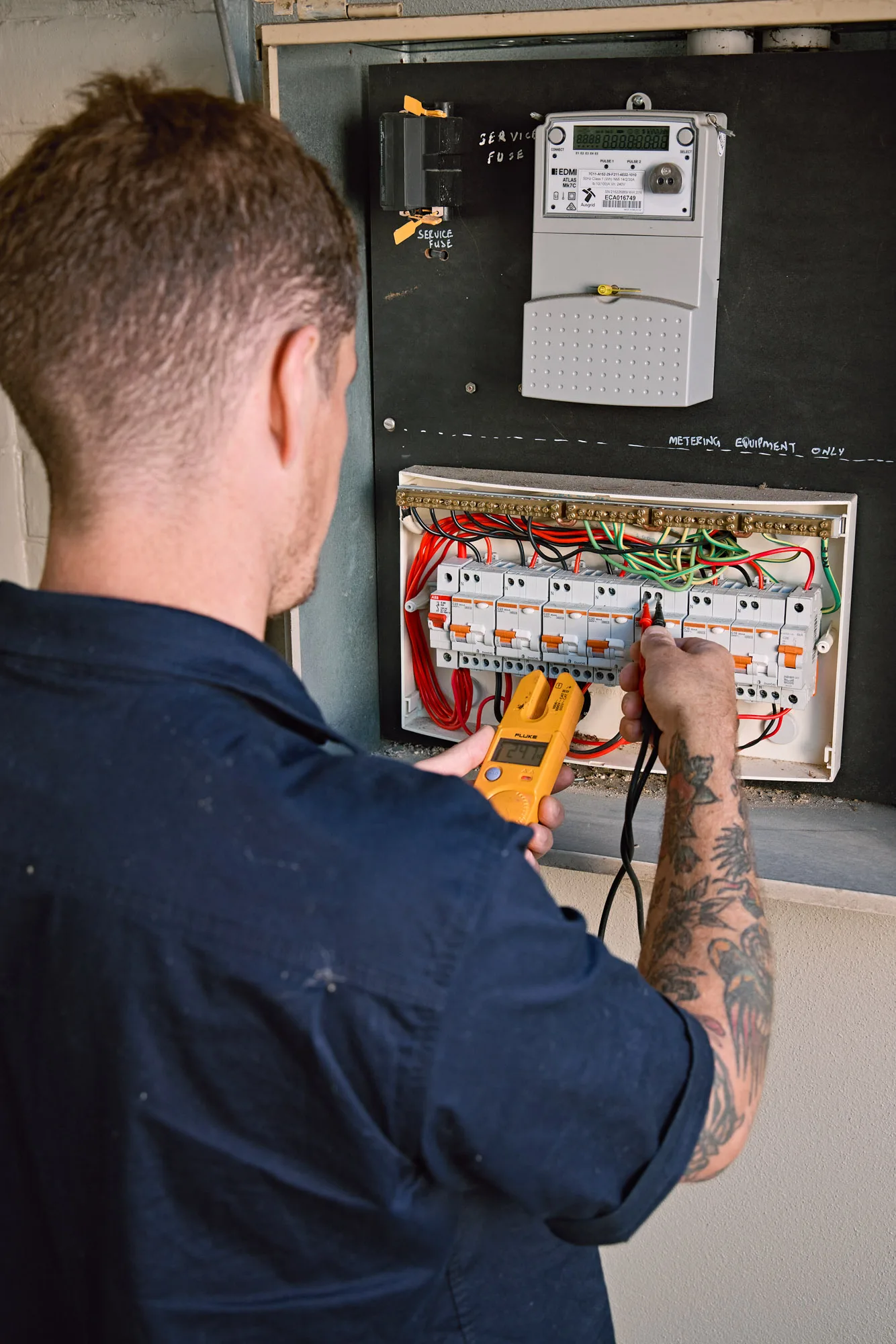
Which Appliances Trip a Breaker Most
Often the culprit is a single appliance rather than the wiring, and a few types show up far more than the rest.
- High-draw heating. Kettles, heaters, dryers and ovens pull hard, and running two at once on the same circuit is a classic overload trip.
- Ageing motors. Fridges, pumps and power tools with worn motors can spike as they start, tripping the breaker on switch-on.
- Damaged leads and plugs. A frayed cord or a cracked plug top can short internally and trip the circuit the moment it is used.
- Wet outdoor gear. Pumps, garden lights and anything left out in the weather can leak to earth and trip a safety switch after rain.
The quick test is to unplug suspects one at a time. If the trips stop, you have found it; if they continue with everything off, the fault is in the wiring.
What To Do Before We Arrive
A few safe checks make the visit quicker, and not one of them means going near the board itself.
- Turn off and unplug everything on the affected circuit, then flip the breaker back on a single time.
- Watch what happens with the circuit bare: if it stays on, the trouble is an appliance; if it drops again, the wiring is the suspect.
- Watch for what is running or the weather each time it trips, and pass that pattern on when you call.
How We Fix the Fault for Good
We find why the breaker keeps tripping before we hand the circuit back, rather than resetting it and leaving.
We stage the circuit back on. Bringing each section and appliance up one at a time forces the fault to reveal itself instead of staying hidden.
We test for the fault type. Insulation and earth-leakage readings tell us whether we are chasing a short, a leak to earth or a breaker past its best.
We repair and verify. We fix the cause, swap a failed breaker for one of the correct rating, and confirm the circuit holds under real load. It is all done to the AS/NZS 3000 wiring rules, and any notifiable job comes with a Certificate of Compliance.
Prevention Beats Repair
Once the immediate fault is fixed, a few steps keep the same breaker from tripping again down the track.
- Ease a heavily loaded circuit by installing extra outlets so one line is no longer feeding a whole room on its own.
- Move an older board onto modern breakers and safety switches with a switchboard upgrade.
- Book fault finding and repairs at the first repeat trip, before an intermittent fault becomes a constant one.
- Have outdoor and roof-space wiring checked for moisture and pest damage, the usual culprits behind odd, weather-driven trips.
Related Faults and Surrounding Areas
A breaker that trips often shares a cause with other symptoms on the same board. A fuse that keeps failing or lights that dim and flicker alongside it usually means the board is carrying more than it was built for.
Our local team looks after Haberfield homes and out through Croydon, Five Dock and Summer Hill.

Book an Electrician Today
A tripping breaker is worth sorting properly before it becomes a daily nuisance. Ring (02) 9538 7139 and a local electrician will test the circuit, track the fault and set it right, often same or next day.
New customers save $50 on their first booking with us.
Common questions
Haberfield Tripped Circuit Breaker FAQs
A few of the things homeowners around Haberfield ask us most when a breaker keeps tripping.
How do you work out what tripped the breaker?
We switch everything on that circuit off, reset the breaker, then bring each appliance and section back one at a time until it trips again. Whatever caused the trip shows itself, so we repair the actual fault rather than guess.
How quickly can you get to a Haberfield home for this?
For a breaker that keeps tripping we can usually be there same or next day. If you have no power to a critical circuit or anything looks unsafe, tell us on the call and we will treat it as urgent.
How much does it cost to sort a tripping breaker?
It depends on whether the fault is a single appliance, a section of cable or the breaker itself, so we test first and then give you a written price. You approve that fixed quote before any work starts.
Is it my appliance or my wiring that is tripping the breaker?
Often it is a single faulty appliance, which you can sometimes spot by unplugging things one at a time. If the breaker trips with everything unplugged, the fault is in the wiring and needs a licensed electrician.
Can I just keep resetting it myself?
Resetting a breaker once is fine, but resetting one that trips straight back is not, and any work inside the switchboard is illegal for anyone but a licensed electrician in NSW. Repeated trips mean a fault that needs finding.
Why does the breaker only trip at certain times?
Breakers usually trip when load or moisture peaks, so mornings with the kettle and heater together, or damp weather reaching an outdoor circuit, are common triggers. The timing itself is a useful clue to the cause.